
Electrical Products Guide (India) — Choosing the Right Components
📌 Introduction
From switches to distribution boards, the components used in your home's electrical system directly affect its safety and reliability. This guide covers common products, their use, and simple selection tips.
⚡ Technical Explanation
| Product | What It Is | Where It's Used |
|---|---|---|
| MCB | Automatic circuit breaker for overload/short circuit protection | Every circuit in the distribution board |
| RCCB | Detects current leakage, protects against shock | Distribution board, especially wet-area circuits |
| MCB Box | Enclosure housing MCBs | Main/sub distribution points |
| Modular Switch | Wall-mounted on/off switch for lights/fans | Every room |
| Socket | Power outlet for plugging in appliances | Every room, kitchen, utility areas |
| Fan Regulator | Controls fan speed | Wherever ceiling/wall fans are installed |
| Modular Plate | Cover plate housing switches/sockets | Every switchboard |
| Cable/Wire | Conducts electricity through the building | Throughout the wiring system |
| Conduit Pipe | Protects wires, allows concealed/surface routing | Throughout wiring installation |
| PVC Box | Houses switches/sockets within the wall | Behind every switchboard |
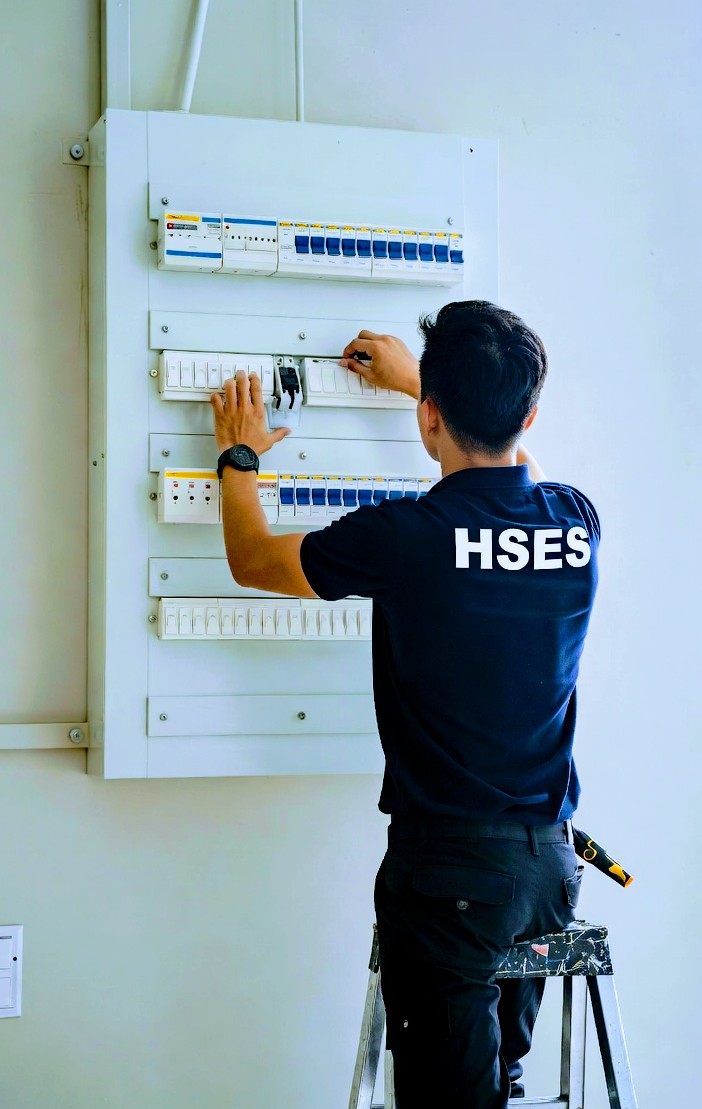
| Distribution Board (DB) | Central panel distributing power to circuits | Main electrical point of the property |
| Ceiling Rose | Connection point for pendant lights/fixtures | Ceiling light installations |
🛠️ Real-life Application
- Choosing switches/sockets: Modular switches are now standard in most Indian homes — look for ISI-marked, branded options with good build quality (smooth operation, secure fitting).
- Choosing wire: Match wire gauge to the circuit's purpose — 1.5 sq mm typically for lighting circuits, 2.5 sq mm for general sockets, higher gauges (4-6 sq mm) for AC/geyser/high-load points (always confirm with your electrician based on actual load).
- Choosing MCB/DB: DB size should have some spare capacity for future circuit additions — don't fill it to exact current need.
- Choosing conduit: PVC conduit is standard for most residential work; ensure proper diameter for the number of wires being routed through it.
❌ Common Mistakes
- • Buying unbranded/uncertified products purely to save cost.
- • Choosing wire gauge based on price rather than actual load requirement.
- • Selecting a DB with no spare capacity, forcing costly upgrades later.
- • Ignoring build quality of switches/sockets, leading to early wear and loose connections.
✅ Best Practices
- • Always check for ISI/BIS certification on wires, MCBs, switches, and sockets.
- • Choose reputed brands with good warranty and after-sales support.
- • Plan for some spare capacity in your DB and conduit sizing for future needs.
- • Match component ratings (MCB, wire gauge) to actual calculated load, not guesswork.
⚠️ Safety Precautions
- Never mix incompatible or non-standard components in critical safety devices like MCBs/RCCBs.
- Damaged or cracked modular plates/switches should be replaced promptly, not left exposed.
- Ensure conduit and PVC boxes are properly sealed to prevent dust/moisture ingress.
📖 Indian Standards
- Wires, MCBs, switches, and sockets should carry valid ISI/BIS certification.
- Product selection should align with IS 732 wiring installation guidelines.
❓ FAQ
Q: Konsi company ki wire achhi hoti hai?
A: Kai reputed ISI-marked brands available hain India mein — brand se zyada important hai ISI mark aur sahi wire gauge selection.
Q: DB kitne circuits ka lena chahiye?
A: Apni current zarurat se thoda zyada capacity ka DB lein, taaki future mein naye circuits (jaise AC) add karne mein aasani ho.
Q: Modular switch aur normal switch mein kya farak hai?
A: Modular switches cleaner design, better safety features, aur customization (multiple switches ek plate mein) dete hain — ab standard ban gaye hain.
Q: Conduit pipe kyu use hoti hai?
A: Ye wires ko physical damage, moisture, aur wear se protect karti hai, aur future repair/rewiring ko aasan banati hai.
Professional Disclaimer
This content is for general educational purposes. For actual electrical work, always consult a certified electrician. HSES Connect® is not liable for damage caused by DIY electrical work performed without professional supervision.
Did you find this guide helpful?
Share it with someone who needs to know about electrical safety or hire an HSES expert for your next project.